As much as I adore the small-town allure of Bedford, PA, a missing component is the presence of ethnic restaurants. And I’m talking about down home, nitty-gritty, eat-with-your-hands ethnic fare, not American Chinese food a la sweet and sour chicken or crab rangoons (don’t get me wrong, I crave and love this kind of Chinese food, and can gobble up a plate of shrimp with lobster sauce with the best of ‘em).
So nowadays, when I travel and stumble upon an ethnic eatery, I make it a point to pull up a chair, even if I’m not necessarily craving that specific cuisine at that particular time. Because I then have to ponder to myself, “When will I have the chance to slurp back a bowl of Pho? Or chug back a glass of mango lassi?”
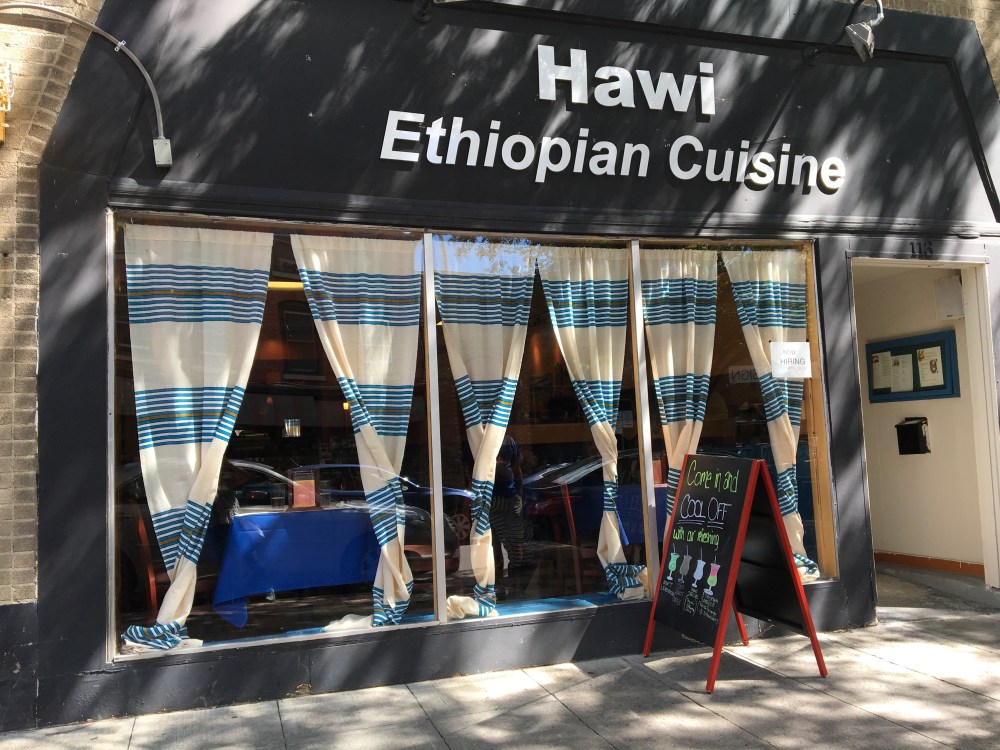
A recent work trip brought me to the happy-go-lucky college town of Ithaca, NY. And right there on the fringe of Ithaca Commons sits an Ethiopian restaurant named Hawi. The thought of eating this Western African country’s cuisine hadn’t crossed my mind in years, but I recall loving the sour and fluffy Injera bread and the stew-like textures of the meat and vegetable dishes. Despite both of us feeling rather sluggish, my husband and I plunked down at Hawi for lunch, ready to embrace the ensuing heavy meal.

Simple but fetchingly striped curtains adorn the large front window panes; the blue tablecloths, black and white checkered floor and scattered paintings also reflect a minimalist approach in décor. Something about the basic yet otherworldly setting of Hawi evokes the feeling of dining at a café somewhere in Addis Ababa. Our thirsts on this balmy day compelled my husband to order a refreshing mint lemonade and myself to try the beguiling peanut iced coffee. This surprisingly hydrating potion was the perfect balance of nutty notes and rich coffee.
Paired with every meal is the Injera I mentioned earlier. Tautly rolled up, this unique bread resembles a hot wash cloth flight attendants will hand out prior to takeoff. Unraveled, the Injera reveals delicate spongy pores that act as cute little vessels to soak up the hearty sauces. My husband grimaces at the sour flavor profile. It’s certainly an acquired taste. But when you scoop it up with the robust meats and vegetables, the natural sourness is not so prominent. Ethiopian fare should be picked up by hand, but we teetered between using utensils and doing it the native way.
We shared a colorful mix and match platter of two meat concoctions and three vegetarian side dishes. A folded-out Injera boasted these exotic delicacies, like they were brightly hued baubles tumbling out of a jewelry pouch. Shiro was red chickpeas actually served as a smooth puree. The look and taste of it mimicked Avjar, a Serbian relish made of roasted red peppers. A classic specialty named Tibs were tender beef cubes braised with jalepenos, tomatoes and onions. Tibs’s meat rival was the Gomen Besiga, roughly chopped lamb braised with collard greens in a buttery and spicy sauce. We love our greens, apparently, because we also ordered the Gomen, collard greens sans the meat and kicked up with reliable seasonings of garlic and ginger. A buttery stew of soft cabbage, potatoes and carrots, called Atkilt, rounded out this lunch extravaganza.
At $14 per person, the price tag seemed steep for lunch, especially since Hawi could have doled out more pieces of lamb in the Gomen Besiga dish. Our platter came out quickly, but when more patrons spilled into the restaurant, the lone server juggled multiple tables and wasn’t as attentive with us as she was in the beginning. We urge Hawi to invest in more wait staff! Overall, however, the lunch tasted authentically Ethiopian. We squealed over the bright flavors and ingredients, and applauded the sophisticated presentation. Really, the only aspect we should be sourpusses about is that lip-puckering Injera.
 Culinary Correspondent